Temporal Analysis in OSINT: Why the Timestamp on That Photo Is Lying to You
 T. Holt
Every OSINT analyst has been there. You pull an image, check the EXIF data, and the timestamp says Tuesday at 14:32. You build a timeline around it. You brief on it. Two days later someone points out the camera's clock was set to UTC+8 when the subject was in Berlin, or the file was re-exported through WhatsApp which strips and regenerates metadata, or the original capture date was preserved but the modification date is what got surfaced in your tooling.
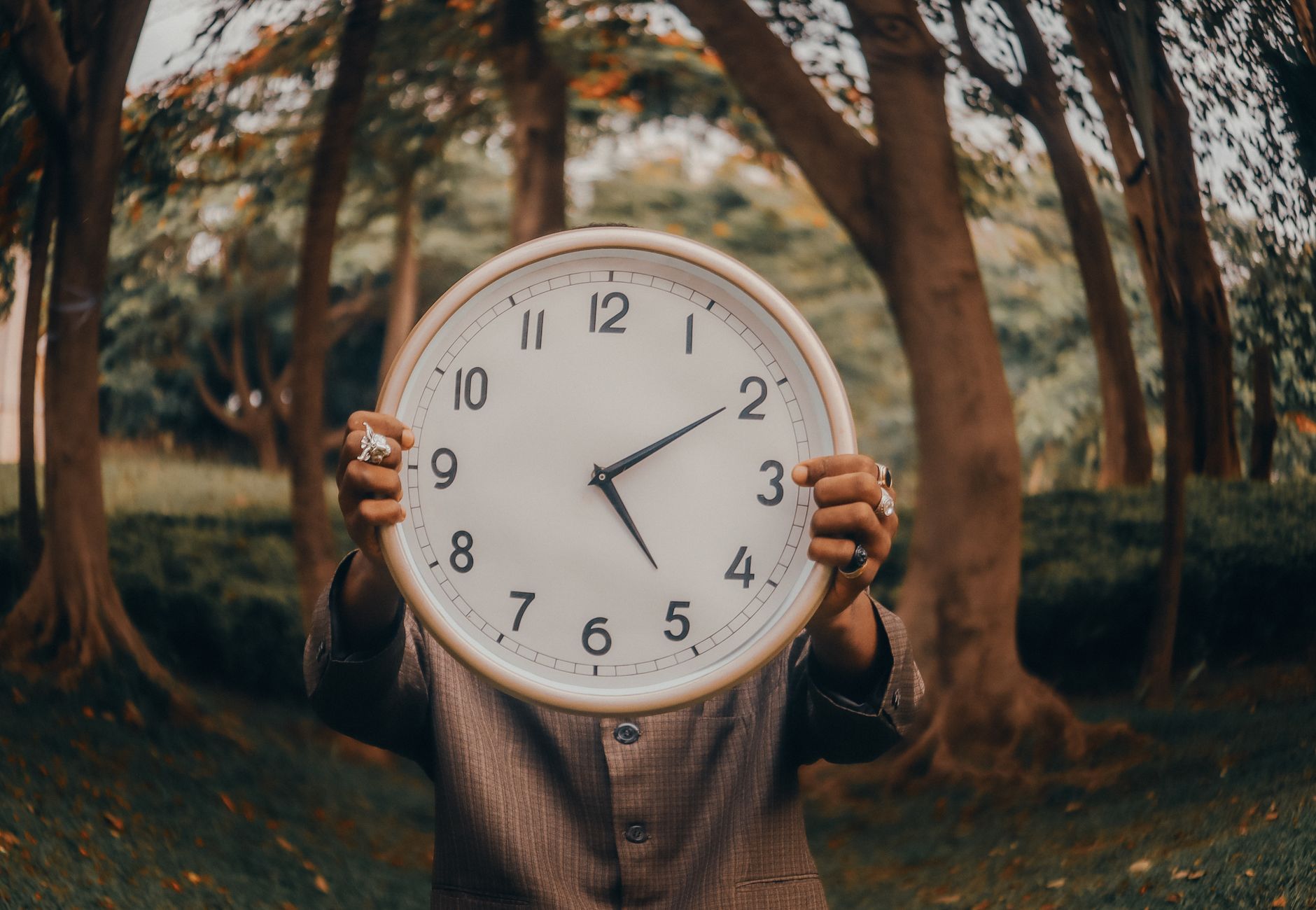 Photo by Meshack Emmanuel Kazanshyi on Pexels.
Timestamps lie. Not always maliciously. Often just through the ordinary chaos of how files move across systems.
This matters more than most analysts treat it. Temporal analysis is load-bearing work in a lot of intelligence products. Activity windows, pattern-of-life assessments, alibi verification, event sequencing: all of it depends on clock data being trustworthy. Build a pipeline that ingests timestamps without validation, and you've built a pipeline that can be gamed by anyone who knows how file metadata works.
Where the Clock Goes Wrong
There are several distinct failure modes, and they stack.
Camera clocks drift. A device that hasn't been synced to NTP in six months can be off by minutes. That's irrelevant for most use cases and catastrophic for others. GPS-enabled cameras auto-sync, but analysts often can't confirm whether GPS was active during capture.
Social media platforms are a different problem entirely. Most platforms strip EXIF on upload and replace it with platform-generated metadata. That platform timestamp reflects when the file hit their servers, not when the shutter clicked. The gap between capture and upload could be seconds or eighteen months.
Re-exports compound this. An image opened in Lightroom and re-saved carries the original capture date in one field and the export date in another. Depending on which field your pipeline reads, you get completely different answers. Add a screenshot of a photo (common tradecraft for operational security), and you've now got a device clock from a third machine layered on top.
Then there's deliberate manipulation. Changing EXIF timestamps requires no specialized tools. ExifTool is free and takes thirty seconds. Anyone who wants to muddy a timeline can do it before you ever see the file.
Building a Pipeline That Accounts for This
The solution isn't to distrust all temporal data. Verify it against corroborating signals.
graph TD
    A[/Ingest Source File/] --> B{Extract Metadata Fields}
    B --> C[EXIF Capture Timestamp]
    B --> D[File System Timestamps]
    B --> E[Platform Upload Timestamp]
    C --> F{Cross-Reference Engine}
    D --> F
    E --> F
    F --> G[Shadow Analysis / Sun Position]
    F --> H[Contextual Signal Matching]
    G --> I((Verified Temporal Window))
    H --> I
Your pipeline should extract all available timestamp fields, not just the one your library defaults to. EXIF DateTimeOriginal, DateTimeDigitized, and DateTime are three separate fields with three potentially different values. File system ctime, mtime, and atime tell a fourth story. Platform API responses sometimes carry their own creation fields. Log all of them. Surface discrepancies as flags rather than silently picking one.
Shadow analysis deserves more attention than it gets in automated tooling. For outdoor images, the angle and length of cast shadows can be cross-referenced against sun position data for the claimed location and date. Tools like SunCalc and Suncalc.net handle this manually; building it into an automated enrichment step is straightforward with an ephemeris library. A claimed timestamp that puts the sun in the wrong position is a hard anomaly. That's not a heuristic. That's geometry.
Weather records are underused. Public meteorological archives for most urban areas go back decades. If an image shows a clear sky but the closest weather station recorded 100% overcast at the claimed time, you have a conflict worth noting.
Content-based signals round out the picture. Construction status of visible buildings, vehicle model years, clothing patterns, visible signage, event crowds: all of these can constrain the plausible date range even when metadata is absent or corrupted. This is slower work, but it produces defensible assessments. A timestamp you can corroborate from three independent signal types is a timestamp you can actually brief.
Confidence Levels, Not Dates
Stop presenting temporal data as a single value. Present it as a range with a confidence level attached.
"Image captured between 13:00 and 15:00 local time, date consistent with late October 2023 based on shadow angle and foliage state, platform upload timestamp corroborates" is a different intelligence product than "14:32, Tuesday." The first one survives adversarial scrutiny. The second collapses the moment someone checks your methodology.
Pipelines that surface raw timestamps without provenance context are producing false precision. That precision feels authoritative right up until it undermines an entire analytic line.
The file says 14:32. Trust the geometry first.
Get Intel DevOps in your inbox
New posts delivered directly. No spam.
No spam. Unsubscribe anytime.