Ephemeral Infrastructure for Covert Operations: Why Persistent Environments Are a Liability
 T. Holt
Persistent infrastructure is comfortable. It's also the kind of comfort that gets operations burned.
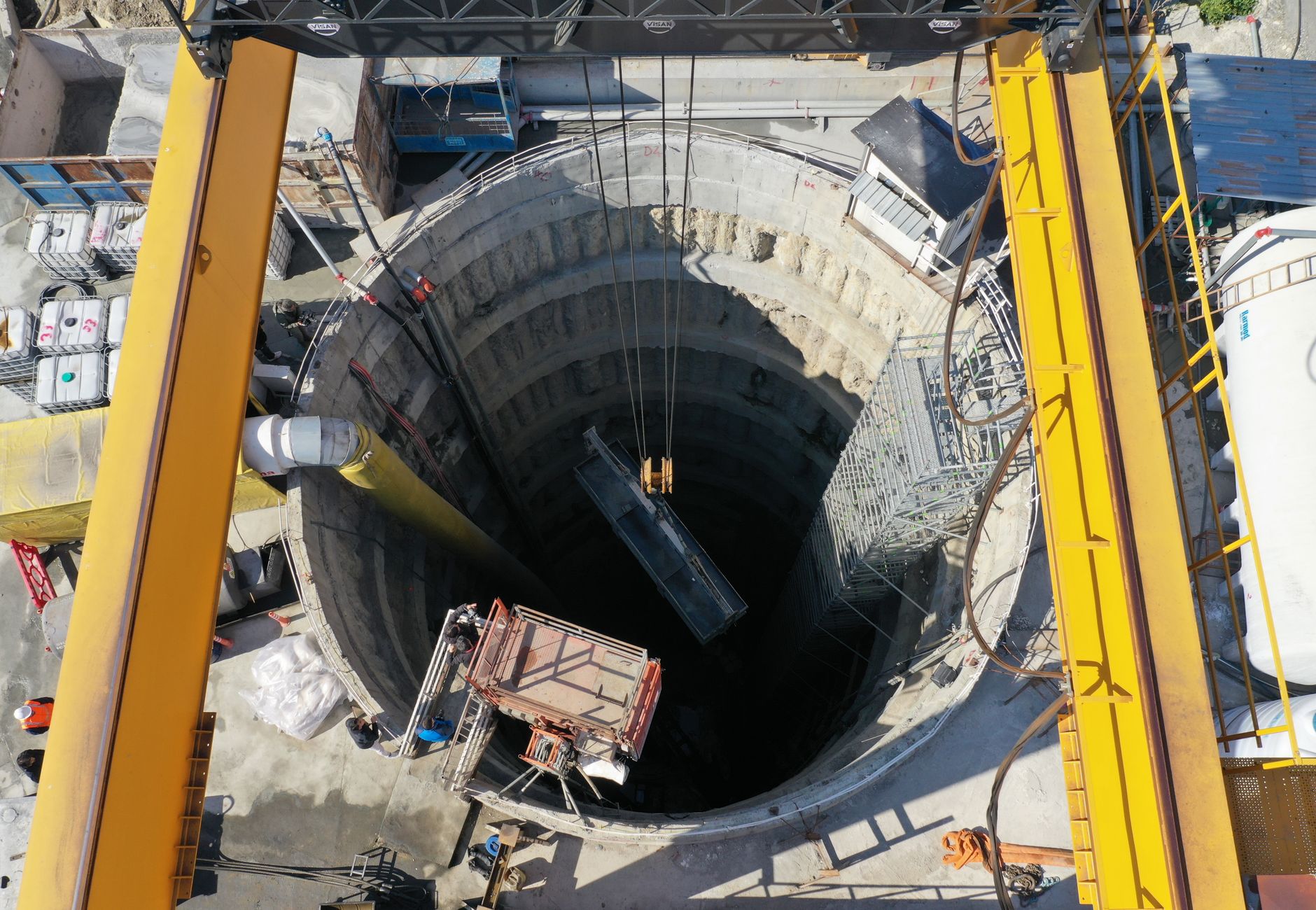 Photo by Sururi Ballıdağ Director on Pexels.
Most teams, even ones doing sensitive work, default to long-lived environments. A staging server that's been running for eight months. A VPC that predates the current administration. A bastion host with an uptime badge someone privately considers a point of pride. None of this is unique to intel operations, but in intel operations, the consequences of that attachment are categorically different.
When an adversary gets persistent access to a long-lived environment, they don't announce themselves. They wait. They map. They learn your tooling, your data sources, your operator patterns. The longer your infrastructure lives, the more signal it emits, and the more there is to compromise.
Ephemeral infrastructure inverts that calculus.
What "Ephemeral" Actually Means Here
Not just spinning up a container and tearing it down. Ephemeral infrastructure, applied to covert or sensitive operations, means the entire environment, compute, networking, DNS, credentials, storage, is provisioned on demand, used for a defined task window, and then destroyed. Completely. No snapshots left behind, no lingering IAM roles, no orphaned S3 buckets.
The lifecycle looks like this:
graph TD
    A[/Trigger: Task Initiated/] --> B[Provision Environment]
    B --> C[Inject Secrets at Runtime]
    C --> D{Operations Window}
    D --> E[Exfil Outputs to Cold Storage]
    E --> F[Destroy All Resources]
    F --> G((Audit Log Sealed))
Each node in that chain is intentional. Secrets aren't baked into images, they're injected at runtime from a separate, hardened vault and revoked when the environment terminates. Outputs go to cold storage that's decoupled from the compute layer. The audit log is sealed, not deleted, you still need accountability, just not an attack surface.
The OPSEC Argument Is Also an Engineering Argument
Here's where a lot of security-minded teams get this wrong: they treat ephemeral infrastructure as purely a security decision and ignore the engineering discipline it demands. Doing this well requires idempotent provisioning, tested teardown scripts, and a secrets injection pipeline that fails closed, not open.
If your teardown script errors halfway through and you don't catch it, you've left a half-destroyed environment that's worse than one you intentionally maintained. Partial states are harder to reason about and easier to miss in an audit.
Tooling that holds up under these requirements: Terraform with a strict destroy step gated by automated verification, Vault with short-TTL leases and revocation hooks, and CI pipelines that treat environment teardown as a first-class job, not an afterthought.
Credential TTLs deserve special attention. If your ephemeral environment runs for four hours, your credentials should expire in four hours and fifteen minutes, not seven days because that's the default. Default TTLs are designed for convenience, not for operations where a leaked credential is a counterintelligence event.
What Persists (And What Shouldn't)
Some things need to persist: raw collected data, chain-of-custody logs, operator access records. These belong in storage that is air-gapped or access-controlled independently of your compute layer. They should never live on the same instance that ran the collection job.
What shouldn't persist: environment configs, runtime secrets, network topology details, tool versions pinned to a specific operation. If an adversary reconstructs your toolchain from artifacts you left behind, that's a methodology compromise, sometimes worse than a data compromise.
One pattern worth adopting: treat each operation as a disposable namespace. Provision it, tag everything with the operation identifier, and write a cleanup job that queries by that tag and destroys every associated resource. Cloud providers make this possible. Most teams don't implement it because it requires discipline up front, not just at teardown.
The Hard Part Isn't Technical
Any engineer who's worked with Terraform and Vault can implement the mechanics of ephemeral environments in a week. The actual resistance comes from operators who've built workflows around persistent tooling, bookmarked dashboards, muscle memory for SSH commands, scripts that assume a known host is always up.
Breaking those habits requires documentation, runbooks that assume nothing is persistent, and tooling that makes ephemeral the path of least resistance. If spinning up a fresh environment takes thirty minutes of manual steps, people will skip it. If it takes ninety seconds and a single command, they won't.
Build the ninety-second path. Then enforce it.
Persistent environments feel like stability. In adversarial conditions, they're just a long-running invitation.
Get Intel DevOps in your inbox
New posts delivered directly. No spam.
No spam. Unsubscribe anytime.